The Difference Between an Optometrist and an Ophthalmologist
Optometrists and ophthalmologists both provide eye care, but their training and professional roles differ. Learn how each contributes to eye care in Nigeria and where opticians fit in.
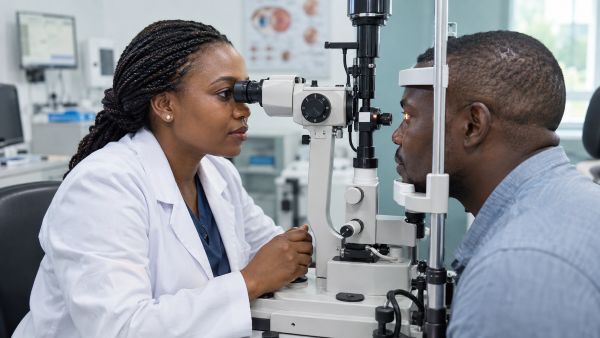
Optometrists and ophthalmologists are both eye-care professionals, but they have different qualifications, training pathways and professional responsibilities. Understanding these differences can help you identify the appropriate professional when seeking eye care in Nigeria.
Who is an optometrist?
An optometrist is a healthcare professional trained in optometry. In Nigeria, optometrists complete a university degree in optometry and must fulfil the applicable professional registration and licensing requirements before practising.
Their work commonly includes:
- Examining the eyes and assessing vision
- Performing vision tests
- Prescribing and fitting glasses or contact lenses
- Providing primary eye-care services
- Identifying eye abnormalities
- Referring patients for additional medical or surgical care when necessary
Optometrists may work in private eye clinics, optical centres, hospitals, universities and other healthcare facilities.
Who is an ophthalmologist?
An ophthalmologist is a medical doctor who has completed additional specialist training in ophthalmology.
In Nigeria, this pathway generally involves medical school, housemanship and postgraduate residency training in ophthalmology, followed by the relevant specialist fellowship qualification.
Ophthalmologists provide medical and surgical eye care. Their work commonly includes:
- Conducting comprehensive eye assessments
- Diagnosing and managing eye diseases
- Prescribing medications and corrective lenses
- Performing eye procedures and surgery
- Providing specialist follow-up care
They commonly practise in teaching hospitals, specialist eye hospitals, general hospitals and private eye clinics.
Are their roles interchangeable?
No. Although some aspects of their work may overlap, optometrists and ophthalmologists do not have the same training or professional scope.
Optometrists are primarily trained in vision assessment, optical correction and primary eye care. Ophthalmologists are medical doctors trained to provide specialist medical and surgical eye care.
The two professionals frequently work together. An optometrist may refer a patient to an ophthalmologist when specialist medical or surgical attention is required. An ophthalmologist may also work with an optometrist for vision testing, corrective lenses and continuing eye care.
Where does an optician fit in?
An optician is not the same as an optometrist or an ophthalmologist.
Opticians prepare, fit and dispense glasses or other optical products based on prescriptions issued by qualified eye-care professionals. Their role centres mainly on ensuring that prescribed lenses and frames are produced and fitted correctly.
Finding eye-care services in Nigeria
The eye-care professionals available differ between facilities. Some hospitals have both optometry and ophthalmology services, while others provide only one of them.
Clinic days, appointment procedures and referral requirements also vary. Before visiting a facility, confirm which eye-care service is available and when its clinic operates.
FindClinicDays helps you locate hospitals offering eye-care services and check available clinic information.
Disclaimer: This article provides general information about eye-care professions and does not replace advice from a qualified healthcare professional.