Aesthetic Doctor vs Dermatologist in Nigeria: What’s the Difference?
Aesthetic doctors and dermatologists may offer similar skin treatments, but their training and qualifications differ. Here is what each title means in Nigeria.
You may see the titles “aesthetic doctor” and “dermatologist” used by clinics in Nigeria. Both may provide treatments that improve the skin’s appearance, but the titles do not describe the same training or professional qualification.
Who is a dermatologist?
A dermatologist is a medical doctor who has completed specialist postgraduate training in dermatology.
In Nigeria, this generally means completing medical school, housemanship and several years of residency training before obtaining a recognised specialist fellowship qualification. Dermatology training covers the diagnosis and treatment of diseases affecting the skin, hair, nails and related tissues.
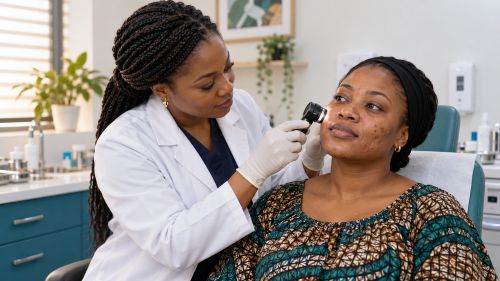
Dermatologists manage conditions such as acne, eczema, psoriasis, infections, hair loss, nail disorders and abnormal skin growths. Their work may involve clinical assessment, laboratory tests, biopsies, medication, minor surgery and follow-up care.
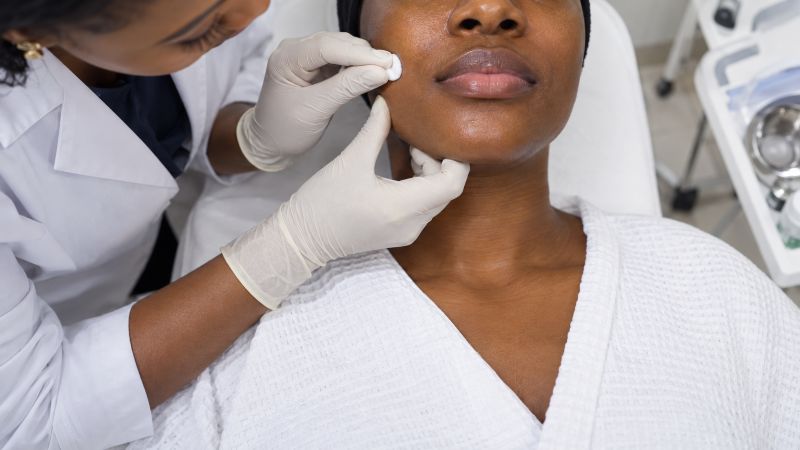
Importantly, a dermatologist can also perform aesthetic procedures. Some dermatologists develop a particular interest in cosmetic dermatology and provide treatments such as chemical peels, laser therapy, microneedling, Botox and dermal fillers.
Who is an aesthetic doctor?
An aesthetic doctor is a medical doctor whose practice focuses on non-surgical treatments intended to improve a person’s appearance.
After qualifying as a doctor, the practitioner may complete additional courses, certificates, diplomas or other training in aesthetic procedures. The duration and depth of this training can differ considerably between practitioners.
Aesthetic doctors may provide treatments such as:
- Botox and other cosmetic injections
- Dermal fillers
- Chemical peels
- Microneedling
- Laser and light-based treatments
- Scar and pigmentation treatments
- Non-surgical facial rejuvenation
Unlike dermatologist, the title aesthetic doctor does not necessarily indicate completion of a full specialist residency in dermatology. It usually describes the doctor’s area of practice rather than confirming that the doctor is a specialist dermatologist.
What is the difference in their training?
Both dermatologists and aesthetic doctors first qualify as medical doctors, but their postgraduate training follows different routes.
A dermatologist completes structured specialist training in dermatology. This usually takes several years and leads to a recognised specialist qualification. The training covers the medical, surgical and cosmetic aspects of skin care. It also prepares the dermatologist to diagnose and manage simple and complex diseases affecting the skin, hair and nails.
An aesthetic doctor undertakes additional training in aesthetic medicine after qualifying as a medical doctor. This training may range from short courses focused on particular procedures to more extensive programmes. It is usually centred on cosmetic treatments rather than the full diagnosis and management of complex skin diseases.
Where do their roles overlap?
The overlap is mainly in cosmetic skin treatments.
A dermatologist may diagnose and treat a skin condition and also offer procedures to improve the appearance of pigmentation, scars, wrinkles or other concerns. An aesthetic doctor may provide some of the same cosmetic procedures without being a dermatologist.
Therefore, a treatment such as Botox, microneedling or a chemical peel does not automatically tell you whether the practitioner is a dermatologist or an aesthetic doctor. The difference lies in the practitioner’s underlying qualifications and training.
Is every person offering aesthetic treatment a doctor?
No. Aesthetic services may also be offered by nurses, aestheticians, beauty therapists and other practitioners. Their qualifications, permitted roles and levels of clinical training are different.
The word doctor should not be assumed from the appearance of a clinic, the treatments advertised or the use of medical-looking equipment. Patients should confirm the practitioner’s professional qualification and registration.
What should you check?
Before undergoing an aesthetic procedure in Nigeria, it is reasonable to ask:
- Is the practitioner a registered medical doctor?
- Is the practitioner a specialist dermatologist?
- What training did they complete for this particular procedure?
- How much experience do they have performing it?
- Who will manage complications if they occur?
- Is the procedure being performed in an appropriate clinical setting?
Professional titles matter, but competence in the specific procedure matters too.
The key distinction
A dermatologist is a medical specialist trained in diseases of the skin, hair and nails and may also perform aesthetic procedures.
An aesthetic doctor is a medical doctor who focuses on appearance-enhancing treatments but is not necessarily a specialist dermatologist.
There can be significant overlap between their services. The clearest way to understand a practitioner’s background is to look beyond the clinic’s branding and ask about their medical registration, specialist qualifications and training in the procedure being offered.
Disclaimer
FindClinicDays provides information to help people understand and navigate specialist healthcare services in Nigeria. This article is for general information and does not replace professional medical advice.